
Architecture, Memory, and Time
Architecture is not about space but about time. _ Vito Acconci 1
Transparency, weightlessness and flotation became central themes of modernity. In recent decades, another architectural imagery has emerged—one that uses reflection, gradations of transparency, overlay and juxtaposition to create subtle and changing sensations of space, movement and light. It promises an architecture in which the relative immateriality and weightlessness of technological construction might become a positive experience of place and meaning.
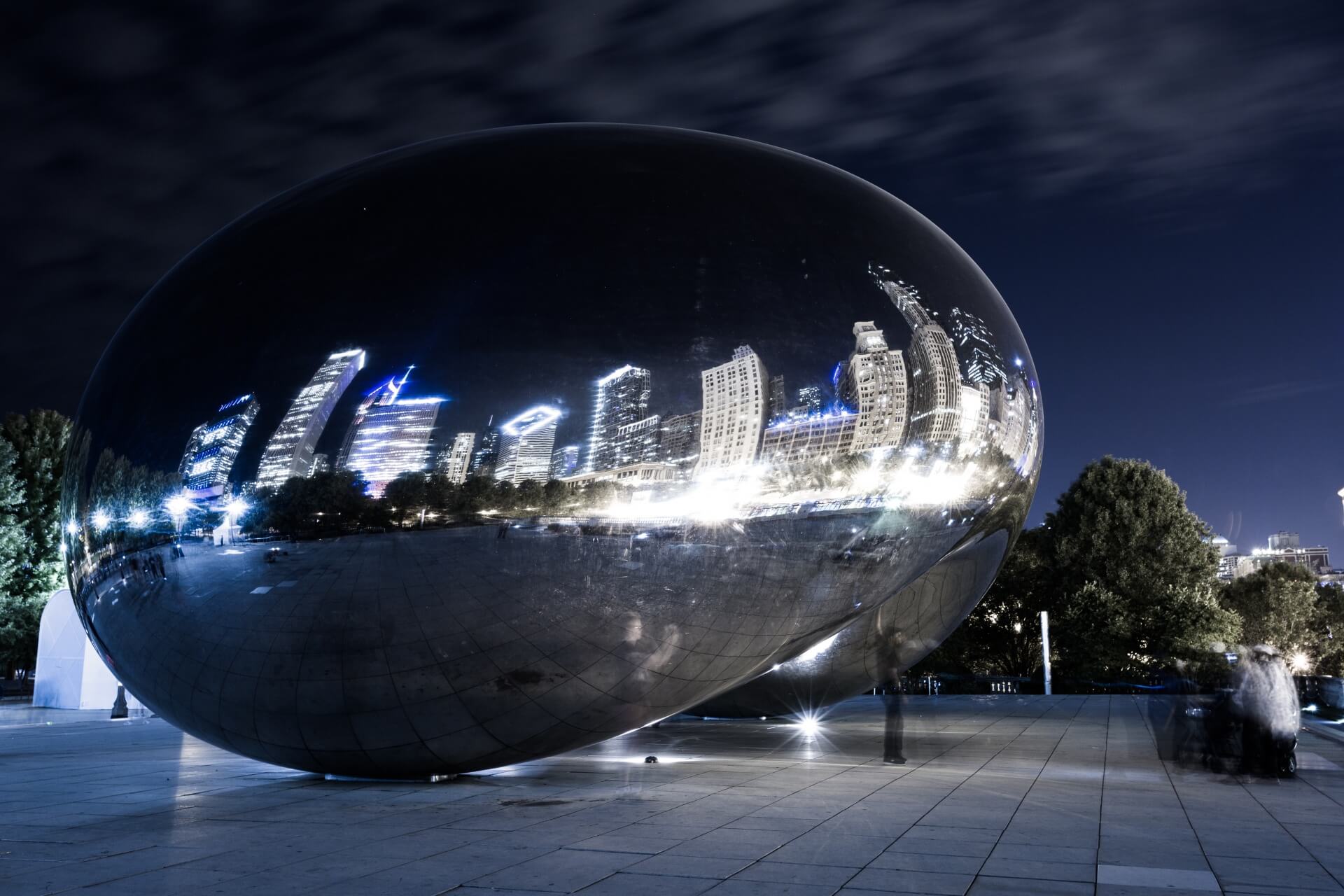
What we learn from Calvino and others has been well put by Kevin Lynch: “We live in a world which is a temporal collage. The juxtaposition of old and new speaks of the passage of time.”2 The weakening of our experience of time in contemporary environments can have profound effects. We have a need to experience ourselves as rooted in a continuity larger than the present moment, and in the man-made world architecture can help make that continuity perceptible—the superimposition of old and new.
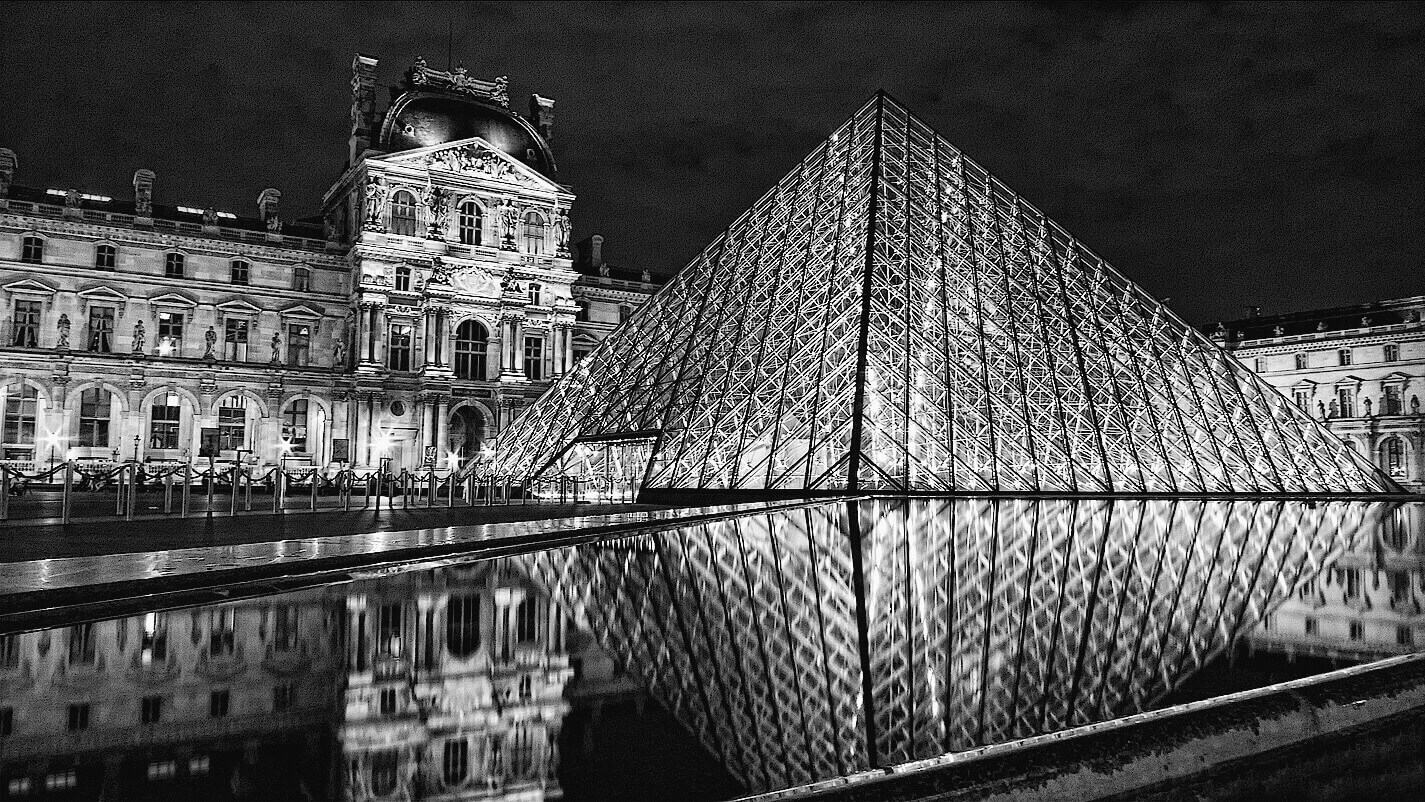
The effects of history—the residue left by the passage of time—are not always intentional. Yet once they exist, they may be intentionally and selectively preserved in our minds, giving us a matrix of mental images in which to locate our identity.
The composition of this matrix is decided by remembrance. The more varied our memory, the greater our capacity to appreciate diverse objects. We recognise their value and add them to the memory-bank of experience. Anything, of course, may be remembered for a while. But for something to remain, it usually has to establish some association with the imagery already present in our minds. It need not correspond to what is already there, but some communication is necessary.
This matrix may be part of what we call tradition. The associations we make between the objects within it create symbolic implications that can stubbornly remain even after the physical object itself has ceased to exist. These associations persist until some sufficiently strong force displaces them: the death of a loved one, for instance, might permanently alter the meaning of an otherwise ordinary object—a car, a chair, a room. The object shifts within the mental matrix. The shift may be temporary or permanent, depending upon the strength of the force.
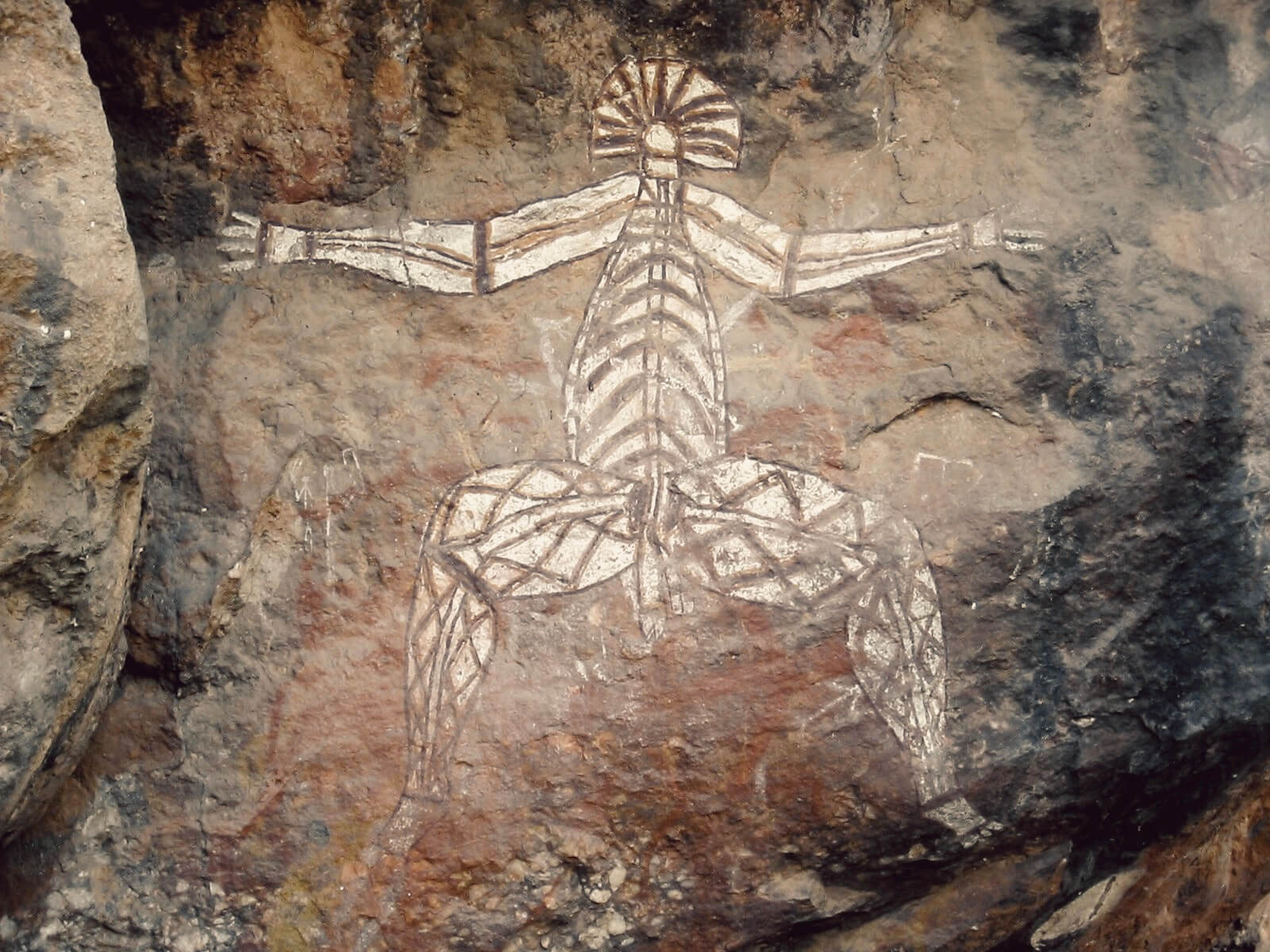
Through all this, I am trying to emphasise that we are constantly involved in the superimposition of our mental landscape over the physical one. Australian Aboriginal cultures offer an unusually powerful example. The visible built environment may appear slight to an outsider, yet the cognitive environment can be extraordinarily rich and complex.3 Landscape is overlaid with memory, story, ancestry and ritual association, coinciding with visible features at particular places. What may look empty to an outside observer is anything but empty to those who inhabit that cognitive landscape.
This is perhaps the purest extreme of superimposition. We may not inhabit cognitive landscapes of such intensity, yet none of us entirely escapes this tendency of the mind.
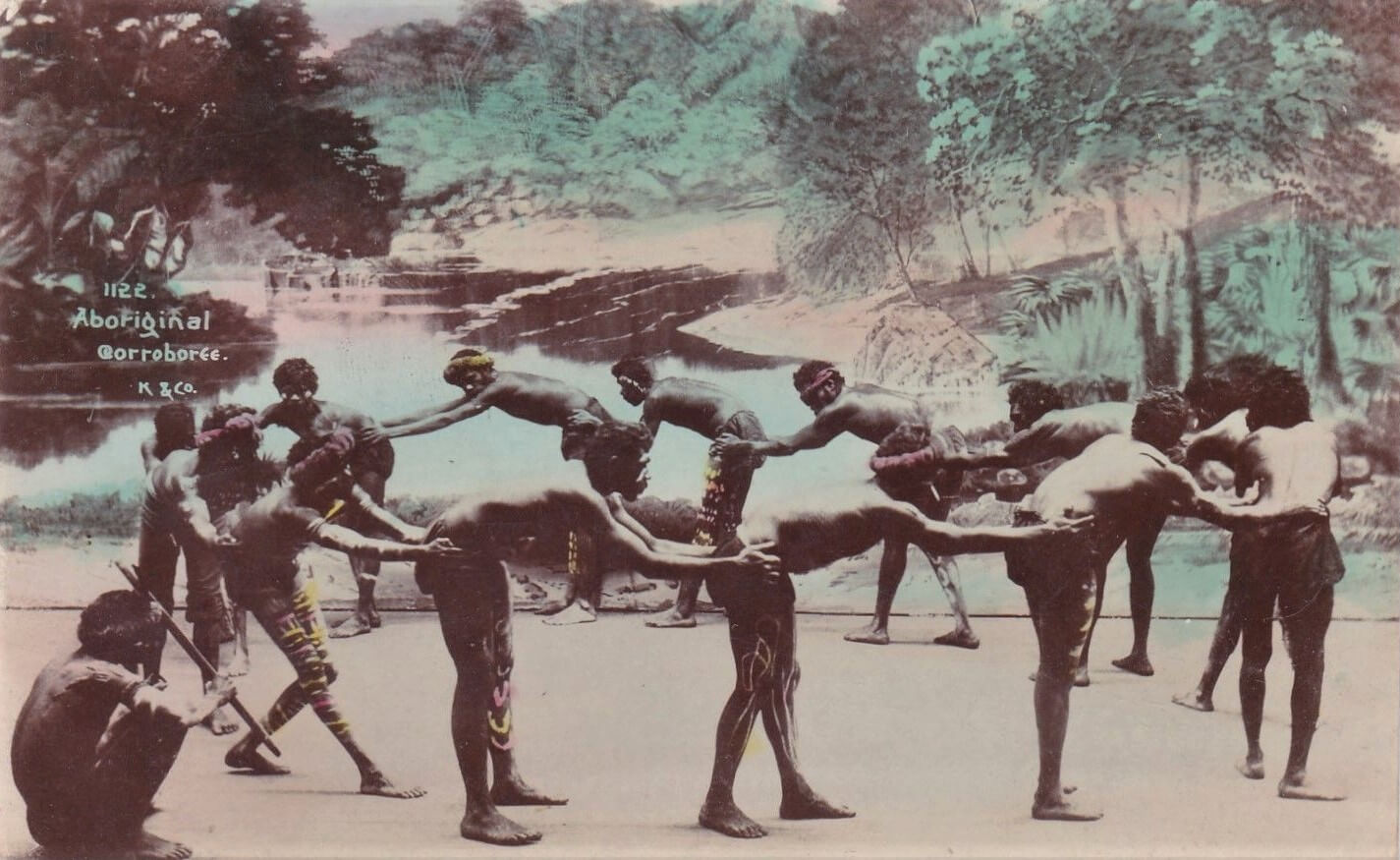
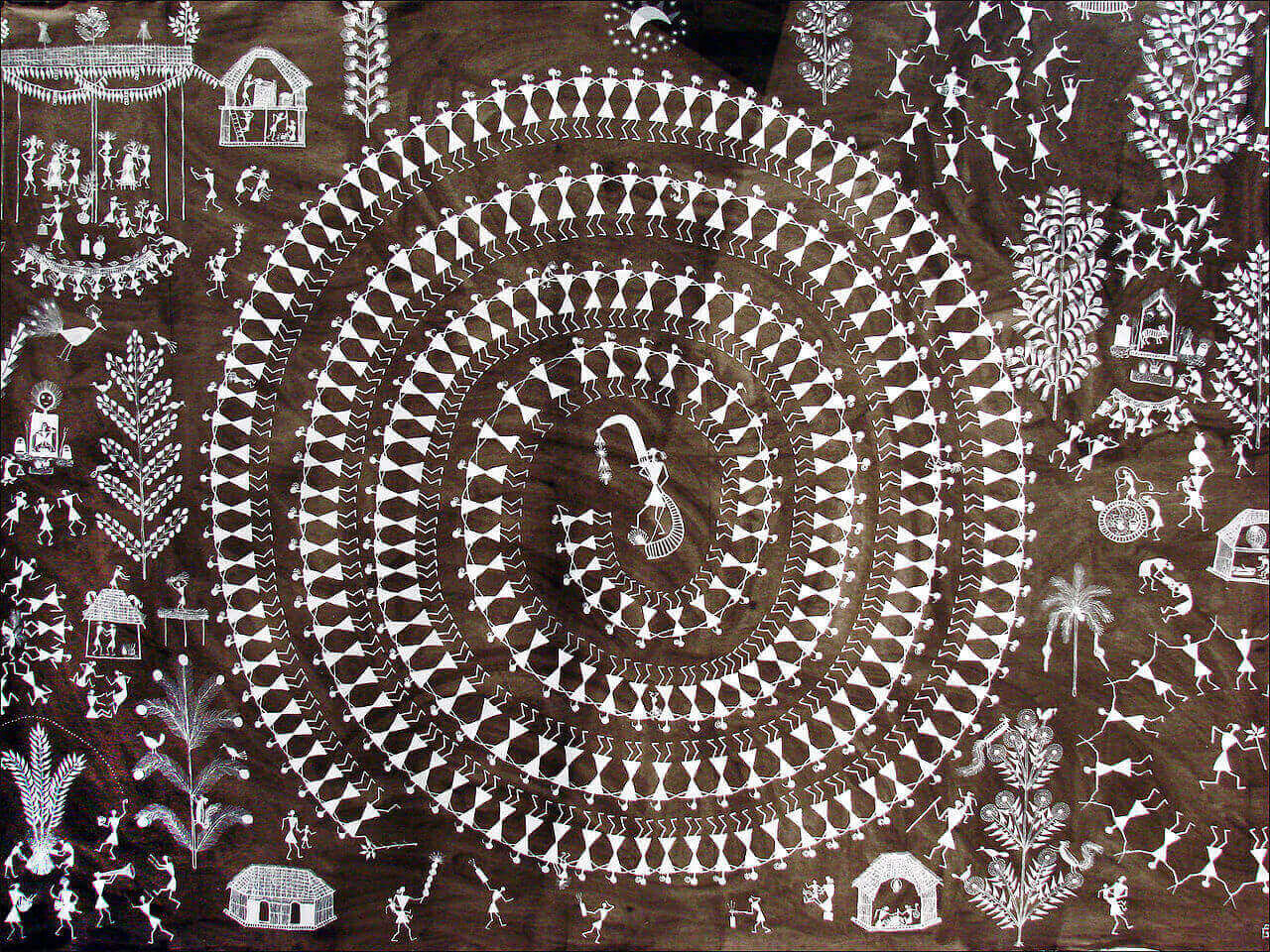
Each of us lives in a world partly of our own making. Yet these are parallel worlds that share certain histories, elements and events, allowing us to communicate with one another. Sometimes we meet someone who does not share those histories, and the familiar signals begin to misfire: language, gesture, reference and context become a comedy of errors. Our shared histories are among the fixed points in the mental matrix.
When a new insertion is made in the environment, it may need to conform more closely to this mental landscape than to the physical one. And yet it should allow us secretly to enjoy the mixture of new and old in the physical environment, so that it can be willingly appropriated and appreciated.
When successive insertions are layered deliberately, we begin to sense the depth of the matrix. Intrigue appears. Meaning accumulates. We begin to experience time less as a continuous flow than as movement from moment to moment, memory to memory. Some effects of history will be lost and others retained; at the same time, new mental space is created for the future.
An Experiment This experiment is not documenting a resolved building, but provoking possibilities: an attempt to use prose the way Archigram often used drawings—not to describe a finished architecture, but to make possible conditions visible before they existed.
For the purposes of an experiment, imagine a laboratory. Its location is not important yet. A flexible environment. A room. An office. A tent.
Dissolving walls. Shifting floors. Windows that blink. Doors that yawn. Doors like narrow slits, or tall portals. Lights: steady or flickering, bright or dark. Shifting lights. Colour changing from dark to greys to vividness. Wind, breeze, still air. Fragrance. Meditate, dance, laugh. Be still. Vacant or crowded, or somewhere in-between.
Metamorphosis as a function of the mind, not merely the body of the room. Continuous. Contagious. A room that can be disposed of, but an architecture that one carries always. A custom. A matter-of-fact, like the language one speaks or the clothes one wears.
Architecture for the everyday person. A democracy in a room, much like the democracy in a wardrobe. A room to plan, build, put together—to involve oneself in space, and to achieve it. Change, renewal, metamorphosis: “the seventy-eight functions each room of an old house has served over the years”, now fulfilled in a new room—within a year, within one’s lifetime at a place.
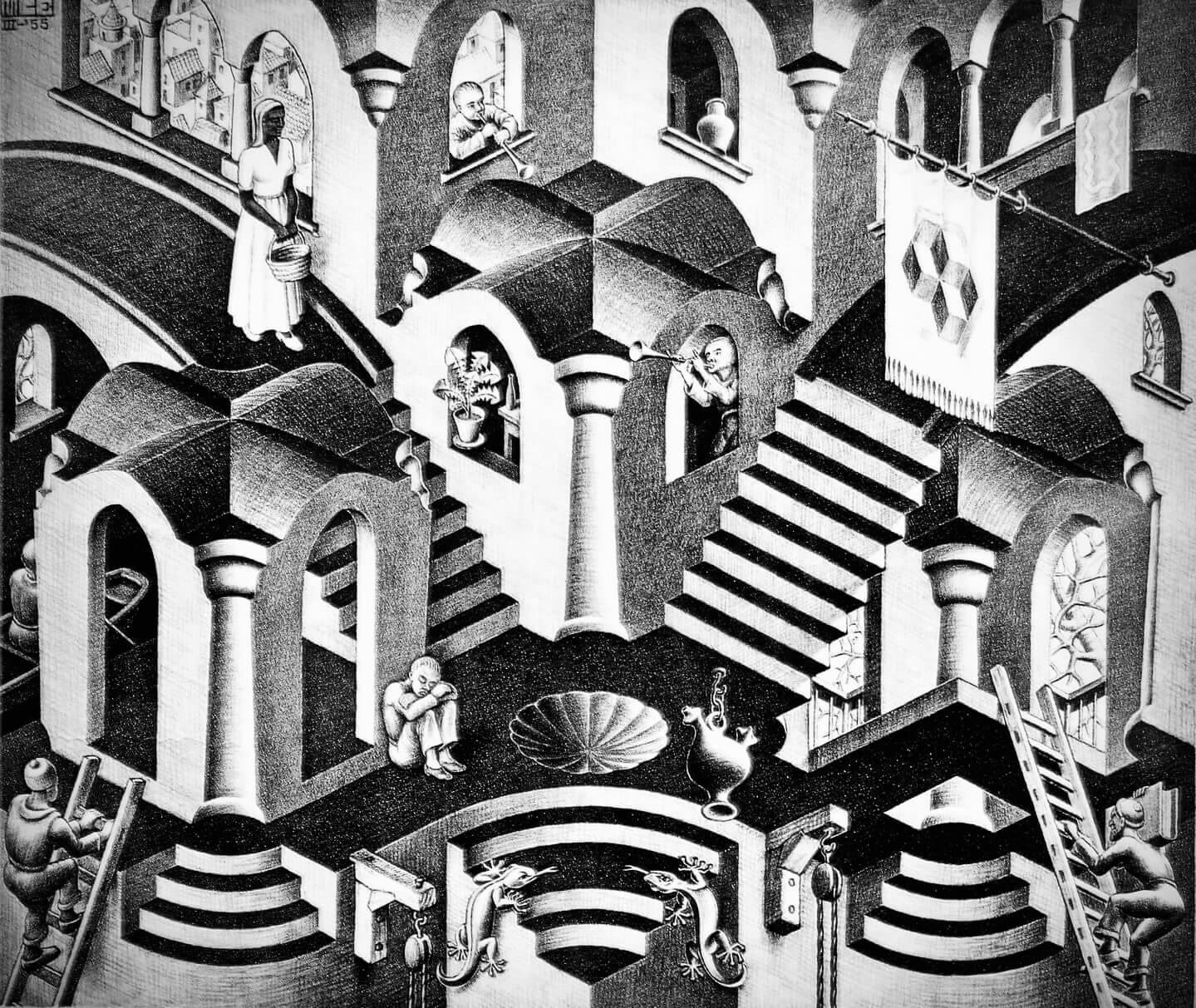
Now imagine a room that does not express itself through the usual terms—door/handle, stair/exit, table/chair, floor/covering, roof/wall/ladder—but through another language:
darkness/light, soft/hard, going-up/going-down, in/out, open/shut.
The point is to force a conscious awareness of the action being performed. Nothing is taken for granted or accepted as definitive; everything may be recreated, from objects to behaviour.
An object remains inanimate until it creates a kind of suspense,4 perhaps by breaking down its expected function, perhaps by finding some other way to resolve it, and in doing so acquiring new meanings—sometimes symbolic ones. The room becomes a physical and visual adventure, forcing an intriguing symbiosis between work and user.
Architecture as a Function of Change
y = y(x)
The statement[ y is a function of x ]means thatyvaries according to whatever valuextakes.
Therefore:Architecture = architecture(Change)
Is the architect more artist or craftsman? Is the problem the creation of the new, or continuous adaptation?
When machines or electronics become outdated, they can be—and are—discarded with ease. What of architectural products? We have used technology to make architecture last. We have almost always wanted our environments to endure.
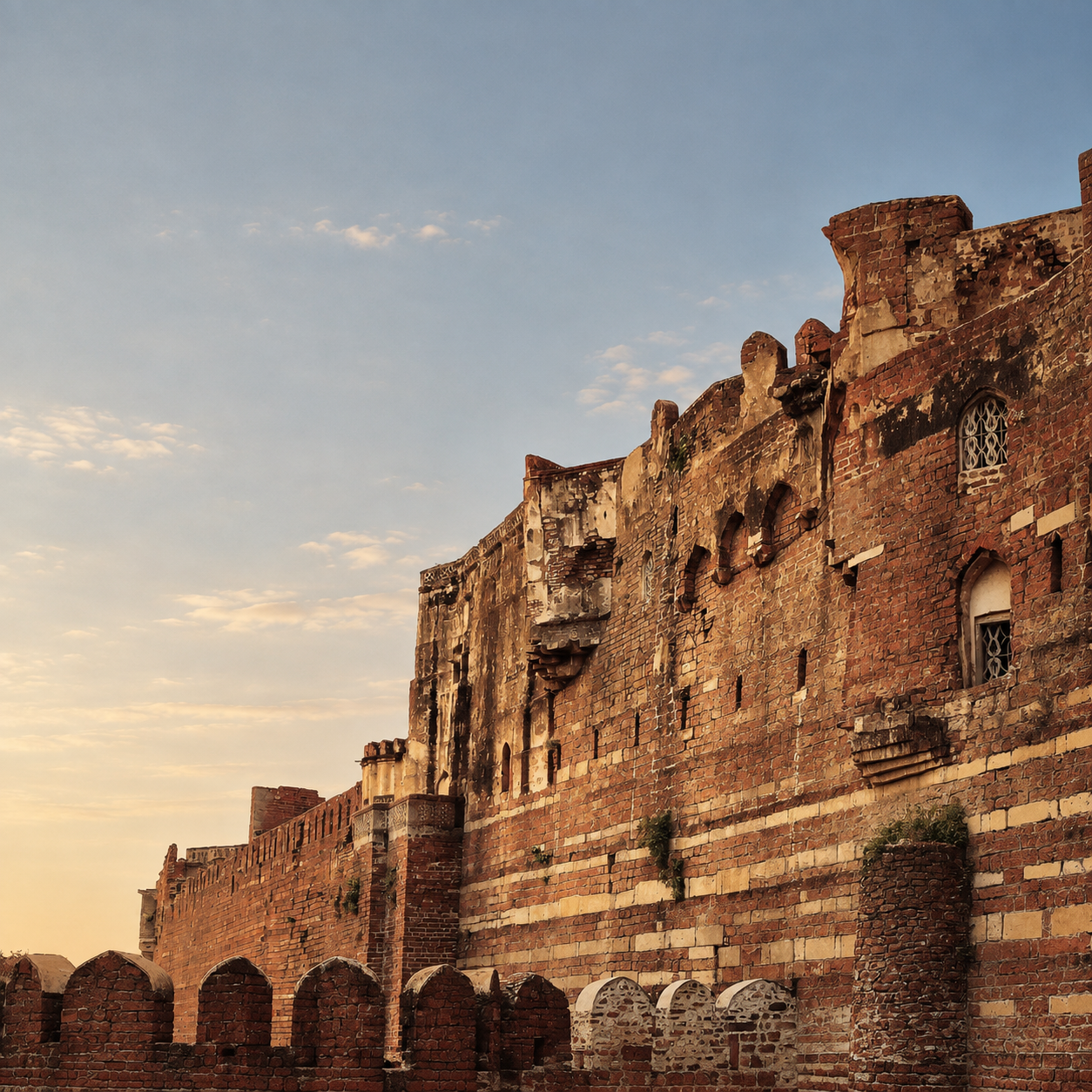
Man’s longing for eternity has never disappeared. In the past it was the search for the elixir; later, genetic engineering and cyberspace would chase versions of the same dream. Yet if change is to be honoured, architecture—of all human endeavours—often seems determined to resist it.
We dispose of technological products when a better alternative arrives or when their purpose has been served. Not so with architecture. Even today, architecture often lacks flexibility. We still live, metaphorically, within the rigidity of the pyramid.
The Egyptian idea of immortality was embedded in the pyramid. It attempted to resist time and nature. What remains now are empty coffins and plundered chambers. Nor can the French Rationalists—Boullée and others—claim immortality simply by borrowing the forms and concepts through which an earlier civilisation pursued it. Monumentalisation has failed as a guarantee of permanence.
Can architecture be a monument to human endurance in this way?
While so many other material endeavours have turned towards flexibility, adaptability and miniaturisation as strategies for survival—or permanence—the stubbornness of buildings is, at the very least, amusing.
Three Diagrams
1
(Architecture) — (Building) > (zero)
2
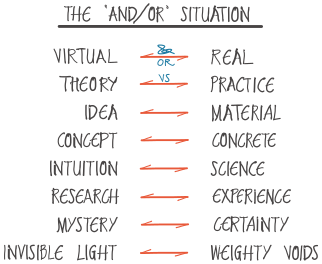
The study of architecture may require opening oneself to both sides of seeming oppositions.
virtual … and/or … realidea … or … material
concept … and … concrete
theory … vs … practice
intuition … and … science
research … and … experience
mystery … or … certainty
invisible light … vs … weighty voids
3
If:
Fuzzy logic : Chaos :: Architecture : Built Environment
and:
Tickle : Itch :: Light : Painting
then:
| Elements of Painting | Architecture’s Alphabet |
|---|---|
| Colour (RYB) | Light & Shadow |
| Tone | Temperature / Air quality |
| Paint | Material |
| Texture | Texture |
| Line / Flow | Sound / Water |
| Shape | Mass / Volume |
| Space | Void |
Vito Acconci, interview with Marcus Fairs, Dezeen, 13 October 2012. Discussing the experience of moving through architecture, Acconci remarks that “architecture is not about space but about time.” Originally encountered via miragestudio7.com. ↩︎
Kevin Lynch, What Time Is This Place? (Cambridge, MA: MIT Press, 1972), 168, 171. ↩︎
Mark Jarzombek, Architecture of First Societies: A Global Perspective (Wiley, 2013). “Symbolic expression, communal organization, memory consciousness, technological specialization, and landscape intelligence constituted the fundamentals of a cultural package that a hundred thousand years ago if not earlier was not only fully operative, but also fully transportable. The native people of Australia, for example, see themselves as part of a world full of interconnected forces that can transition into a rock or a large tree. They themselves are imbued with kuranita (life essences) that form a continuum of beneficent energies. At certain times, groups of hunters will assemble at specific markers in the landscape such as a “kangaroo stone,” for example, and by means of songs and rituals, or sometimes a ground drawing, conjure up the life essences of kangaroos so they can reenter the living sphere. This is often achieved by inducing dreaming. Indeed, a dream abolishes the barriers between the past, the present, and the future so that time is experienced as a sort of simultaneity in a timeless space.” ↩︎
“To live in such a way that you’re always coming across surprises demonstrates that you’re not a paranoid. There are no surprises for the paranoid; everything finds a place within his system. It’s not possible for us to have a system. Perhaps all systems, in other words all the verbal, symbolic and semantic formulations which pretend to explain the universe with universal hypotheses, are manifestations of paranoia. We must correct ourselves with mysteries, absurdities, contradictions, hostility, but also with the generosity that our environment offers us. It may not be much, but it’s always better than the mortal and defeatist certainties of the paranoid.” Dick, Philip K. Philip K. Dick: The Last Interview and Other Conversations. Edited by David Streitfeld, Melville House, 2015, p. 68. ↩︎
