How a Design Project Starts
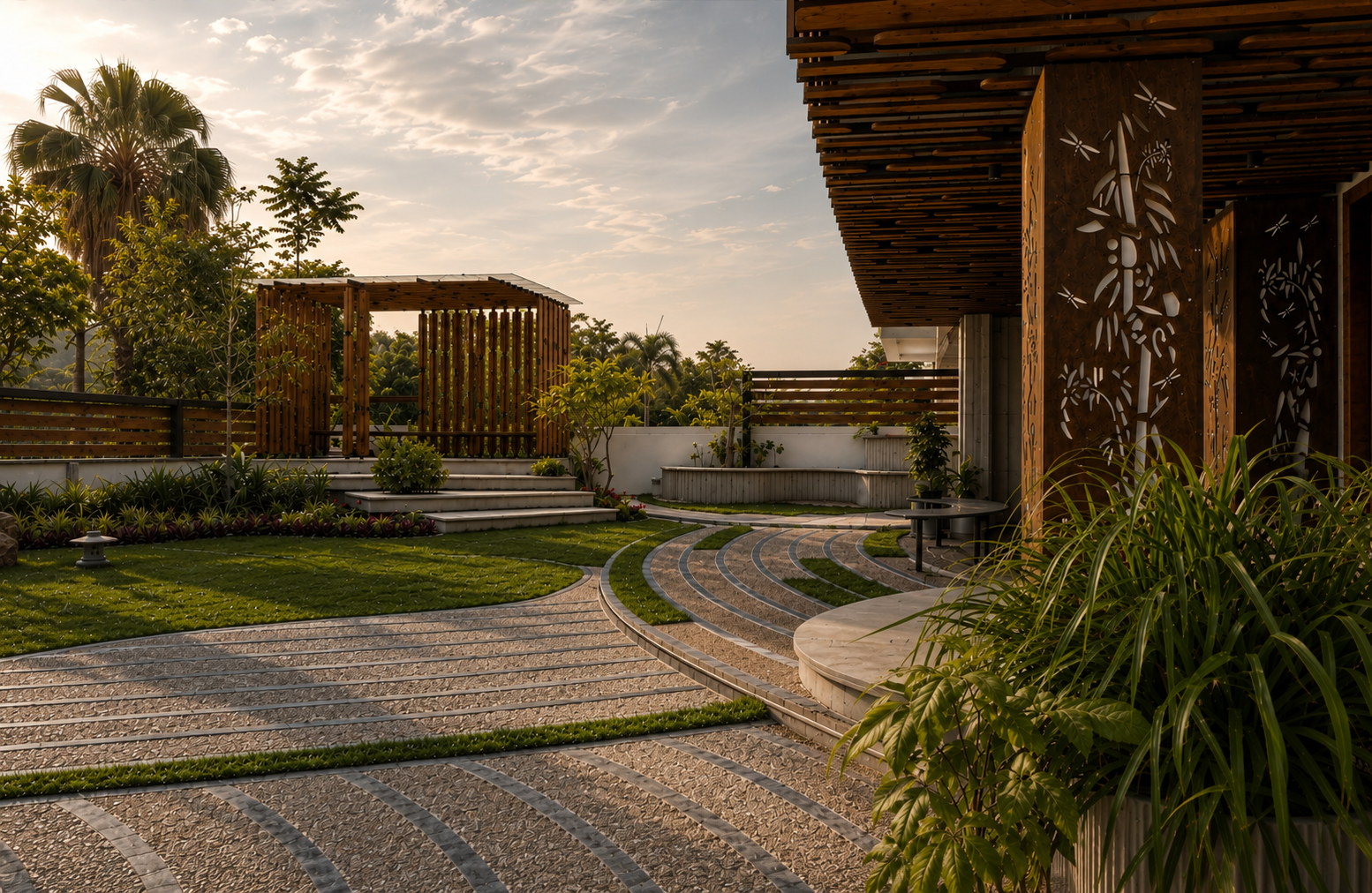
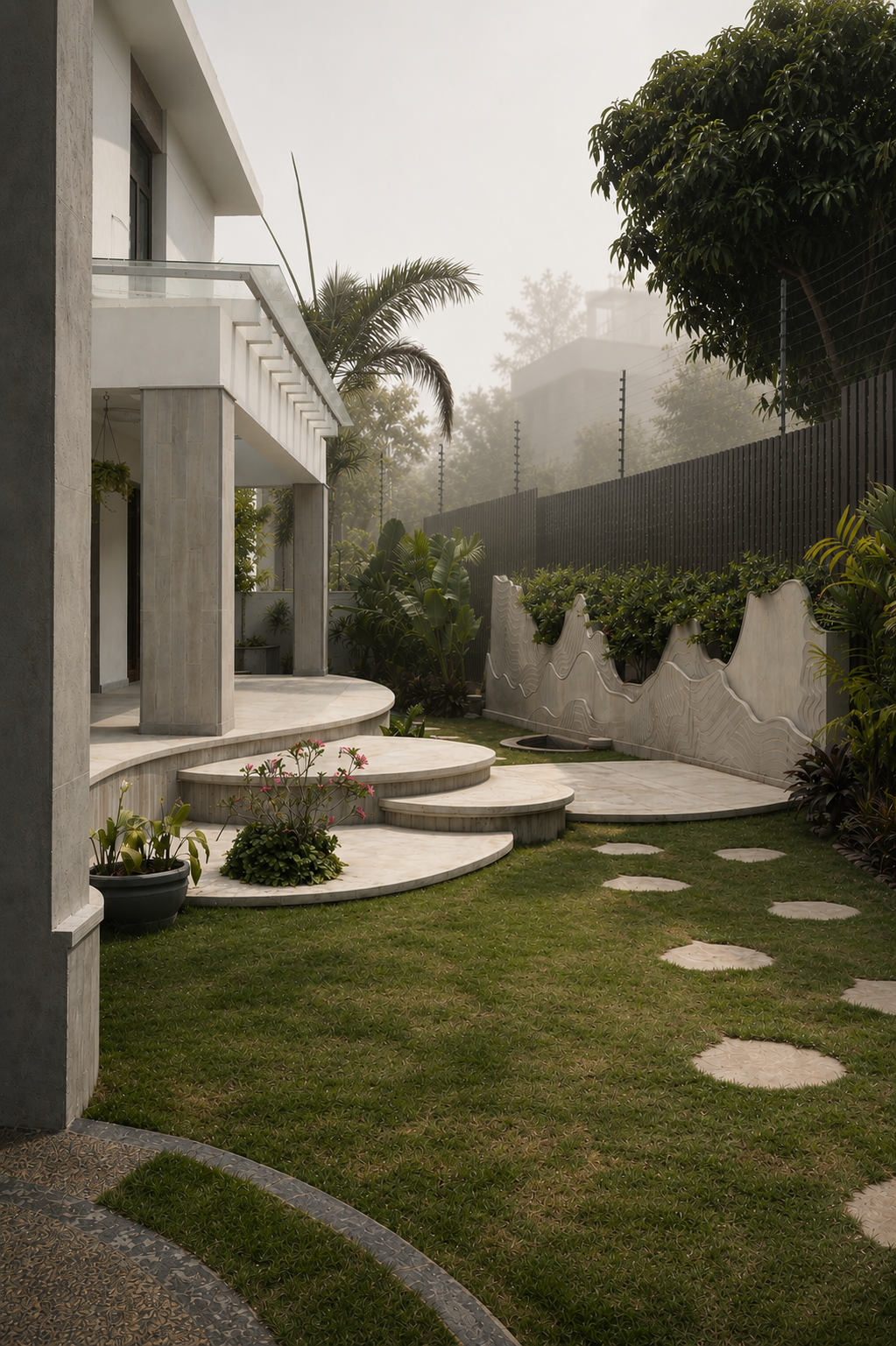
It is a small garden in front of the house, on the east side. She said, “It must be an uncluttered, low-maintenance affair. Add a few ‘feature’ elements…” He asked, “Can it be Vastu-compliant?” — meaning, roughly, get the energy balance right.
That was the client’s brief.
Clients rarely come to designers with the real problem already identified. They know something feels wrong. Our first job is to find out what.
We had recently finished designing their bespoke kitchen and master bedroom. All this while, I had deliberately kept the garden out of my head. Or so I thought. Somewhere in the background, I had been trying to figure out what this space is not, and what it wants to be.
Every time I visited the house, something about its setting bothered me. Today, I looked at the outdoors again.
Sometimes the problem is blatantly in the open, which makes it difficult to find. Luckily, this one had turned its back to me — quite literally.
Once the front yard was cleared, it became obvious. The builder had provided a decent-sized garden space, but there are no windows looking onto it. No door leads into it. Large balconies project from the first floor and sever even the visual connection between the rooms above and the ground below.
The house had been designed as though the garden did not exist.
The builders were so engrossed with the internal planning that they forgot about the outside. But a building does not float in a vacuum. How can one ignore its anchoring ground plane — nature itself?
Frustratingly, local society rules prevent us from knocking holes into the front elevation. I would have loved to put large windows here. We cannot.
So the garden will have to fight its way back into the house by other means.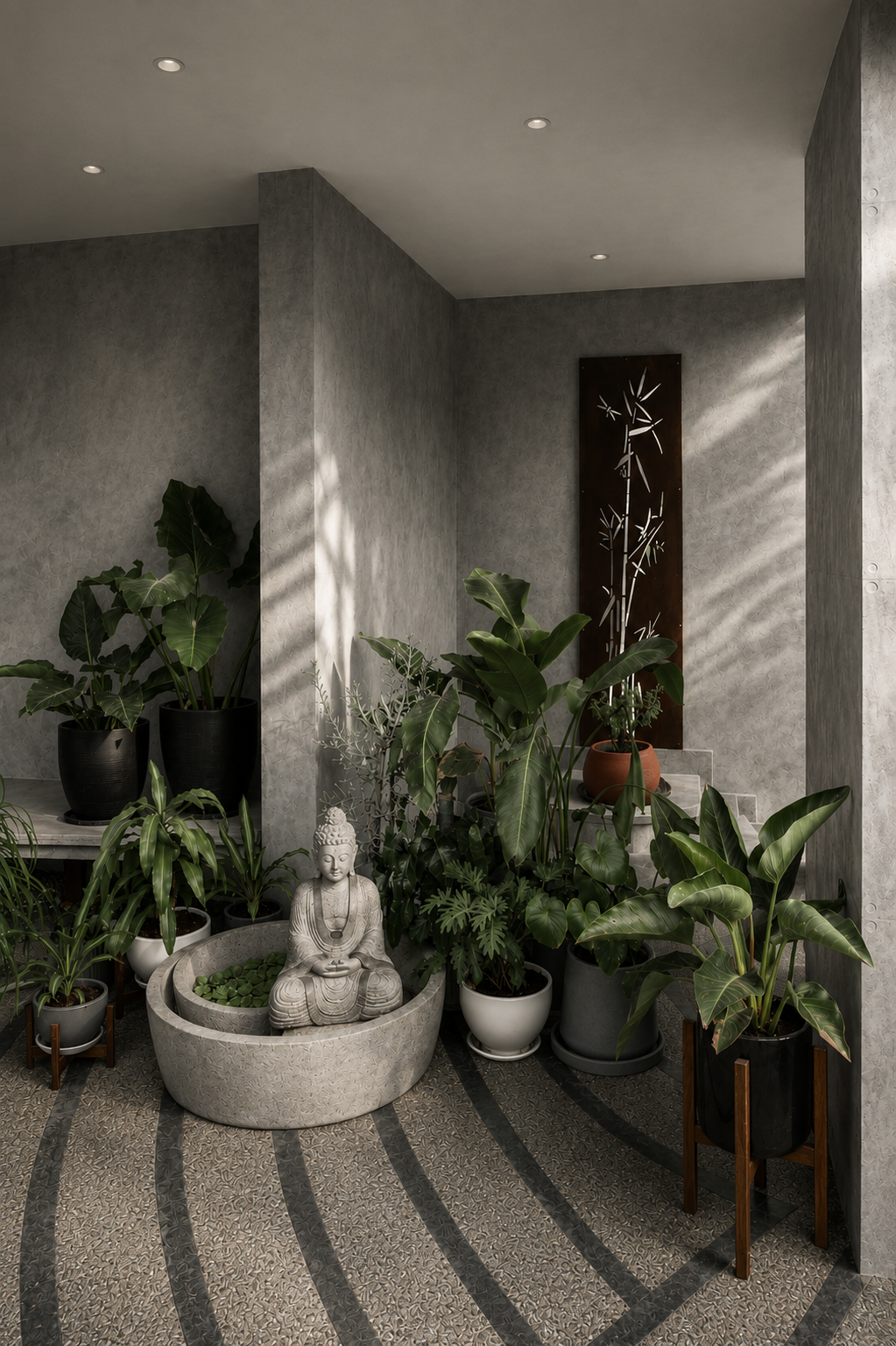 A quiet corner where architecture gives way to living things
I realise now that this garden wants to become alive. It wants someone to wander into it after yoga and sit down with a healthy snack. On another evening, it might gather a few friends. On Sunday morning, it might become the family room without a roof. Sometimes it may simply offer a chair, some shade and twenty minutes of silence.
Whatever it becomes, it desperately wants to be included in the lives of its owners.
We spend enormous effort designing walls, floors and ceilings; wardrobes, kitchens and furniture. But however beautifully made, these are inanimate things surrounding living people.
A garden reverses that condition.
Here, we get to be surrounded by life — delicate living forms, separate from us — quietly reminding us of our place in the larger scheme of things.
Making a garden is designing with living forms.
Now we have a design brief.